Plot + Construction Composite Loan Guide (Bangalore)
When you buy a residential plot and plan to build your own home on it, a plain land loan and a composite plot-plus-construction loan are two very different products. A pure land loan finances only the land purchase; a composite loan bundles the land cost and the future construction cost into a single sanction, disbursing the construction portion in stages as the house comes up. For a plotted community like Bulwark Highgrove in Devanahalli, where you own the plot and build later, the composite structure is usually the more useful of the two. This guide explains how each works, what banks look at, and the documents you should keep ready — in plain terms, without quoting any specific bank's rates.
The one-line difference. A land loan hands you money to buy the plot and stops there. A composite plot-plus-construction loan approves both the land and an estimated build cost up front, but releases the construction money only against actual progress on site — footing, slab, walls, finishing. That single distinction drives everything else: the loan-to-value you get, the tenure, the tax you can claim, and the paperwork a lender demands before signing off.
Land Loan vs Composite Plot + Construction Loan
A pure land loan (often called a plot loan) is a term loan against the land alone. It typically carries a lower loan-to-value ratio, a shorter tenure, and — importantly — no income-tax benefit while the plot sits vacant, because the tax code rewards a completed self-occupied house, not bare land. A composite loan solves that by treating the land and the planned dwelling as one project. You submit an approved building plan and a construction estimate at application; the lender sanctions a combined amount, releases the land portion at registration, and then meters out the construction tranches. The catch that most buyers miss: a composite loan usually requires you to start construction within a defined window (commonly two to three years, lender-dependent), failing which the unused construction limit can lapse or convert to a plain plot loan.
| Feature | Pure land loan | Composite plot + construction loan |
| What it funds | Plot purchase only | Plot purchase + phased construction |
| Typical LTV | Lower (land is illiquid) | Higher on the combined project value |
| Disbursal | Single, at registration | Land upfront, construction in stages |
| Tenure | Shorter | Longer, like a home loan |
| Tax benefit | None on vacant land | Available once home is complete |
| Construction condition | None | Must build within lender's window |
The figures a lender offers vary by profile, income, and internal policy. Treat the table as a structural comparison, not a rate card.
Loan-to-Value: How Much a Lender Will Fund
Loan-to-value (LTV) is the share of the property value a bank will lend against; you fund the rest as down payment. On a bare plot, lenders are conservative because vacant land is harder to resell and does not generate an occupancy that anchors repayment. A composite loan lets the bank underwrite against the higher combined value of land plus the finished house, so the sanctioned amount is generally larger. Two practical points: the land portion of the LTV is calculated on the registered land value, and the construction portion is calculated on the approved cost estimate — a lender will not fund a build figure it considers inflated, so a realistic, plan-backed estimate helps your case. Registration charges, stamp duty, and GST are almost always excluded from LTV and must come from your own funds.
Construction-Linked Phased Disbursal
The defining mechanic of a composite loan is that the construction money is released in tranches tied to physical progress, not paid out in one go. After the land tranche settles the plot purchase, a lender's technical valuer inspects the site before each subsequent release. A typical sequence follows the build itself:
- Land tranche — disbursed at plot registration.
- Foundation / plinth — released after footing and plinth are certified.
- Superstructure — against completed slabs, columns and brickwork.
- Roofing & finishing — plastering, flooring, fittings.
- Completion — final tranche on the finished, inspected house.
Because the bank pays as you build, your interest during construction is charged only on the amount actually disbursed — a genuine cash-flow advantage over borrowing the whole sum on day one. Many lenders let you service interest-only (pre-EMI) until the last tranche, after which the full EMI begins. The trade-off is discipline: delays in construction stall the next release, so your builder's schedule and the bank's inspection cycle need to stay in step.
Tenure, Repayment and Tax Treatment
Because a composite loan behaves like a home loan once the house is up, tenures run long — commonly up to 20 years or more, subject to your age and retirement horizon. Tax treatment is the biggest reason buyers prefer composite over a bare plot loan. Under the Income-tax Act, deductions on a housing loan crystallise only when the property is a completed house: interest paid during construction is not deductible year by year but can be claimed in five equal instalments beginning the financial year construction completes, and principal repayment qualifies once the home is finished and you take possession. Tax rules and the choice of tax regime change how much of this you can actually claim, so confirm your position with a qualified tax adviser for your assessment year — this guide is general and not tax advice.
Documents and the RERA Layout Requirement
For the land side, lenders want a clean title chain: the sale deed or agreement, the encumbrance certificate, the khata and up-to-date tax receipts, and — for a project plot — the developer's title documents and the approved layout. For the construction side, you add the sanctioned building plan, an architect's or engineer's cost estimate, and often a construction agreement. On the borrower side, expect the standard KYC, income proof, and bank statements. One requirement specific to plotted projects deserves attention: banks increasingly insist that the layout be registered under Karnataka RERA before they lend against a plot in it, because the registered layout is the legally binding record of plot area, roads and open spaces. You can check a project's status on the state portal at rera.karnataka.gov.in.
How This Applies at Bulwark Highgrove
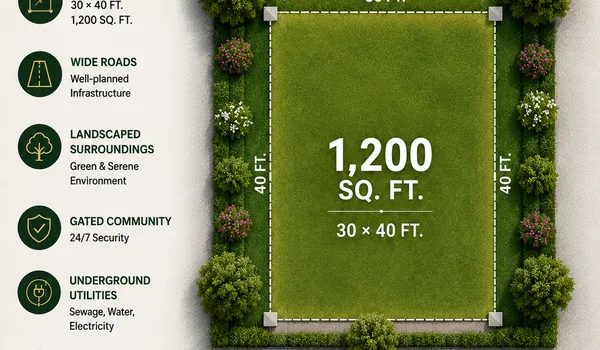
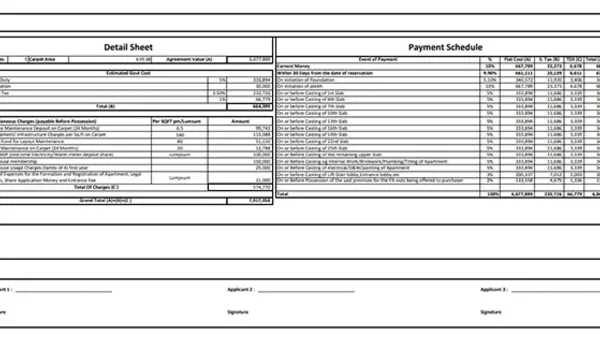
Bulwark Highgrove is a 10-acre gated plotted community at Dyavarahalli, near IVC Road and the STRR in Devanahalli, roughly 26 minutes from Kempegowda International Airport. Buyers own a land plot and build their own home — exactly the pattern a composite plot-plus-construction loan is designed for. The project is K-RERA registered under PR/010926/008897; the registered layout governs the plot area a lender will fund against. Loan eligibility, LTV and rates remain entirely between you and your bank, but the standard cost sheet, sizes and payment milestones are laid out on the site so you can build a realistic construction estimate. For plot pricing that feeds your loan estimate, see the Price page.
Frequently Asked Questions
1. What is a plot-plus-construction composite loan?
It is a single loan that finances both the land purchase and the future construction of your home. The land amount is disbursed at plot registration, and the construction amount is released in stages as the house is built, rather than in one lump sum.
2. How is a composite loan different from a pure plot loan?
A pure plot loan funds only the land, usually at a lower loan-to-value, a shorter tenure, and with no tax benefit while the land is vacant. A composite loan adds the construction cost, generally offers a higher combined loan-to-value and a longer tenure, and unlocks home-loan tax benefits once the house is complete — but it requires you to start building within the lender's window.
3. How does construction-linked disbursal work?
The construction portion is released in tranches tied to on-site progress — foundation, superstructure, roofing, finishing — with a bank valuer inspecting before each release. You pay interest only on the amount disbursed so far, so borrowing costs during construction are lower than taking the whole sum upfront.
4. Can I claim income-tax benefit on a plot loan?
Not on vacant land. Tax deductions apply once the loan funds a completed house. Interest paid during construction is generally claimable in five equal instalments from the year construction completes, and principal repayment qualifies after possession. Rules vary by tax regime, so confirm with a qualified tax adviser.
5. Does the plot need RERA registration to get a loan?
For plotted projects, lenders increasingly require the layout to be registered under Karnataka RERA, since the registered layout is the legally binding record of plot area and open spaces. You can verify a project's status on the state portal at rera.karnataka.gov.in.
6. What documents do I need for a composite loan?
For the land: sale deed or agreement, encumbrance certificate, khata, tax receipts, and the developer's approved layout. For construction: the sanctioned building plan and a cost estimate. Plus standard KYC, income proof and bank statements. Registration, stamp duty and GST are usually excluded from the loan and paid from your own funds.
Explore Bulwark Highgrove